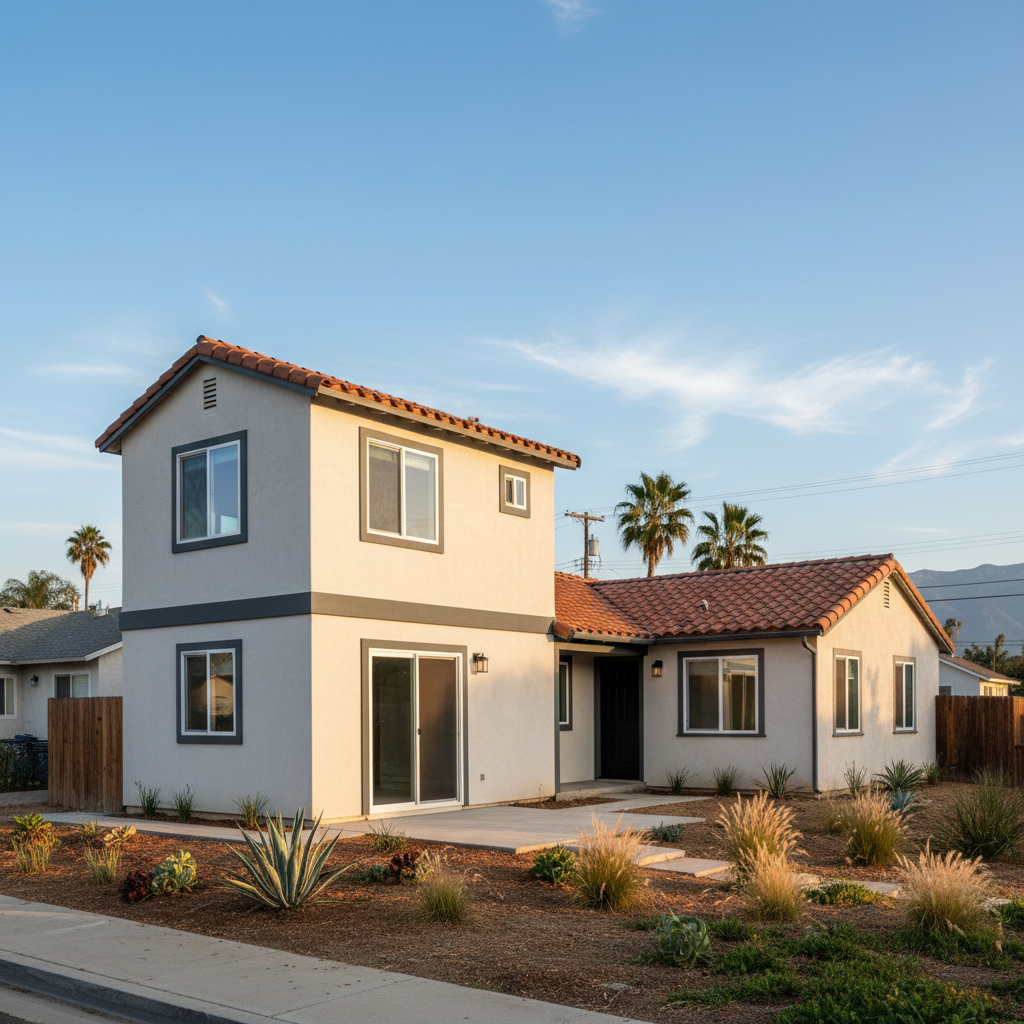
Alright, let's talk attached ADUs here in Santa Ana. You're probably looking at your garage or an existing part of your house and thinking, 'Could that be an ADU?' The answer is usually yes, and it's often the most cost-effective way to add living space. But 'cost-effective' doesn't mean 'cheap,' and you need to know what you're getting into. I've been doing this for years, and I've seen it all.
What Even Is an Attached ADU?
Simply put, it's an Accessory Dwelling Unit that's connected to your main house. The most common type around here is a garage conversion. You're taking an existing structure, or a part of your house, and turning it into a separate living space with its own kitchen, bathroom, and entrance. This is usually cheaper than building a brand new detached unit because you've already got a foundation and walls.
So, What's the Price Tag for an Attached ADU in Santa Ana?
Look, I'm not going to give you some vague 'it depends' answer. You want numbers, and I'll give you numbers based on what I'm seeing on projects right now. For a typical attached ADU, especially a garage conversion, you're usually looking at a range of $100,000 to $200,000. Yeah, that's a big range, but there's a reason for it, and I'll explain what pushes those numbers up or down.
A basic 400 sq ft garage conversion with standard finishes? You might land closer to that $100k-$120k mark. If you're talking about a larger 600-800 sq ft conversion, or one that needs significant structural work, or you're picking high-end finishes, then you're easily heading towards $150k-$200k.
What Drives the Cost Up or Down?
A few big things really move the needle on pricing:
- Size and Scope: Obvious, right? A 300 sq ft studio conversion is cheaper than a 700 sq ft one-bedroom. Also, are we just converting a garage, or are we adding a small bump-out addition to the side of the house?
- Existing Conditions: This is huge for attached ADUs. Is your garage foundation solid, or does it need significant repair? Is the roof in good shape? Are the walls plumb? Older homes, especially those classic Santa Ana bungalows in places like Floral Park, can have some surprises. Sometimes, what looks like a simple conversion turns into a full structural overhaul because of old, unpermitted work or just plain wear and tear.
- Plumbing and Electrical: Where are your existing utility lines? If we have to trench across your yard to bring new sewer, water, and electrical connections to the ADU, that's going to add significant cost. If it's right next to existing lines, it's a lot easier.
- Finishes: This is where you have the most control. Standard laminate flooring, basic cabinets, and off-the-shelf fixtures? That's going to keep costs down. Custom cabinetry, quartz countertops, high-end tile, and designer fixtures? That'll push you to the higher end of the range.
- Permits and Fees: Don't forget these. Santa Ana charges fees for plan check, building permits, and sometimes school impact fees. These can easily add $5,000 to $15,000+ to your project, depending on the size and scope.
- Site Work: Think about access. Can we get equipment in easily, or do we have to hand-carry everything down a narrow side yard? Any retaining walls needed? New separate entrance pathway?
What Does a Quote From Santa Ana ADU Solutions Include?
When you get a quote from us, or any reputable contractor, it should be pretty detailed. You're not just paying for labor and materials. Here's what's typically baked into that price:
- Design and Plans: This includes architectural drawings, structural engineering, and any other necessary plans to get through permitting.
- Permit Acquisition: We handle the paperwork and back-and-forth with the city.
- Demolition: Tearing out the old garage door, any interior walls, old electrical, etc.
- Foundation Work: If needed, pouring new footings or repairing existing slabs.
- Framing: Building new walls, framing for windows and doors, possibly roof modifications.
- Rough-ins: All the plumbing, electrical, and HVAC lines run inside the walls before they're closed up.
- Insulation: Gotta keep it comfortable and meet energy codes.
- Drywall: Hanging, taping, mudding, and sanding.
- Finishes: Flooring, cabinets, countertops, paint, trim, doors, windows, and all your fixtures (lighting, plumbing).
- Exterior Work: Stucco or siding to match your house, new roofing where needed, a new entry door.
- Utility Connections: Tying into existing water, sewer, gas, and electrical lines.
- Project Management: Coordinating all the trades, scheduling inspections, keeping the project on track.
It's a whole lot more than just building a room. It's building a whole separate living unit that meets all the strict building codes.
How to Avoid Overpaying
This is where you need to be smart. Don't just go with the cheapest bid, because that's often a red flag. Here's what I recommend:
- Get Multiple Bids: Three is a good number. Make sure they're all bidding on the exact same scope of work. If one bid is drastically lower, ask why.
- Check References and Licenses: Always, always, always. Call past clients. Look up their CSLB license. Make sure they're insured.
- Be Clear on Finishes: Don't just say 'nice kitchen.' Pick out specific cabinets, countertops, and fixtures before you get bids. The more specific you are, the more accurate the bid will be, and the less chance of change orders later.
- Understand the Contract: Read every word. What's included? What's excluded? What's the payment schedule? What's the process for change orders?
- Ask About Contingencies: A good contractor will tell you that sometimes, especially with older homes, we find surprises. Ask how they handle unforeseen issues and if they recommend a contingency fund (usually 10-15% of the project cost).
An attached ADU is a significant investment, but it can add huge value to your property, whether it's for family, rental income, or just extra space. Do your homework, ask the right questions, and work with someone you trust. It'll pay off in the long run.